TTW students learn job skills
Oct 22, 2026

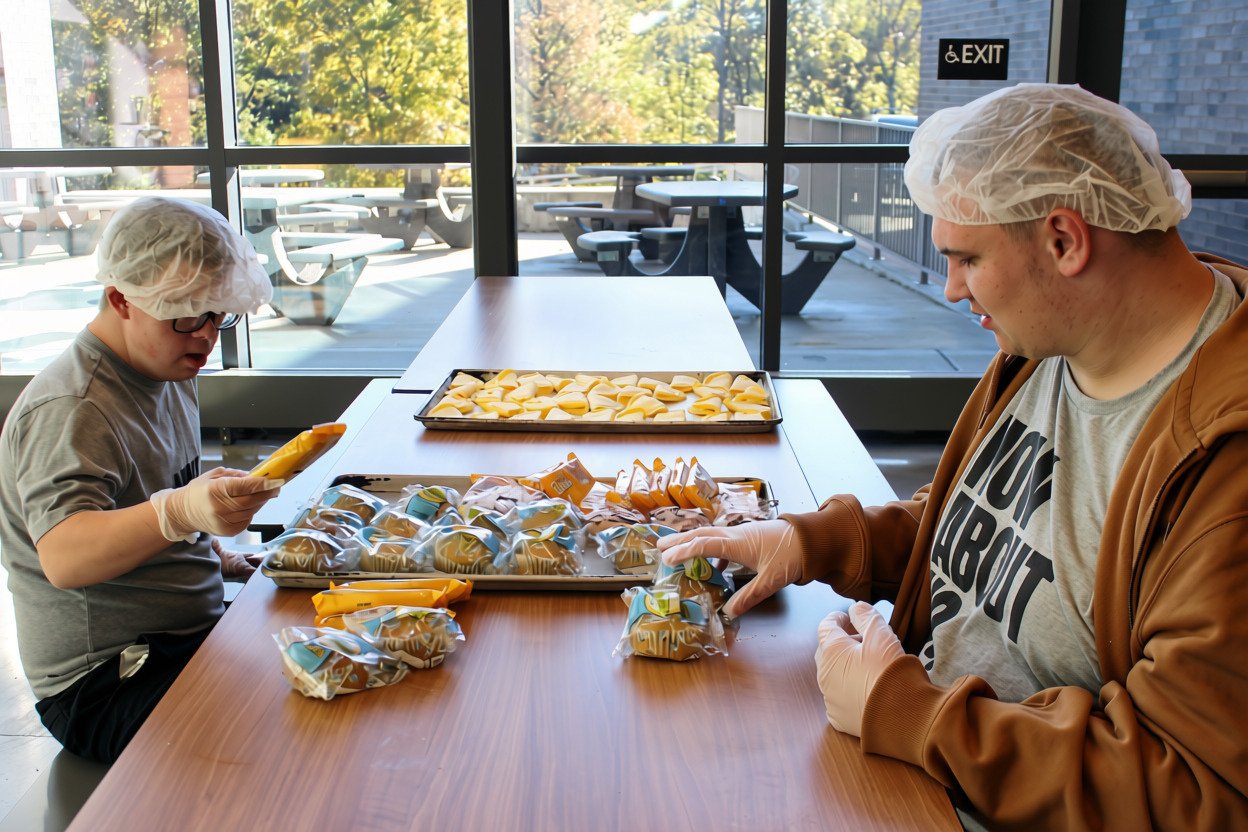
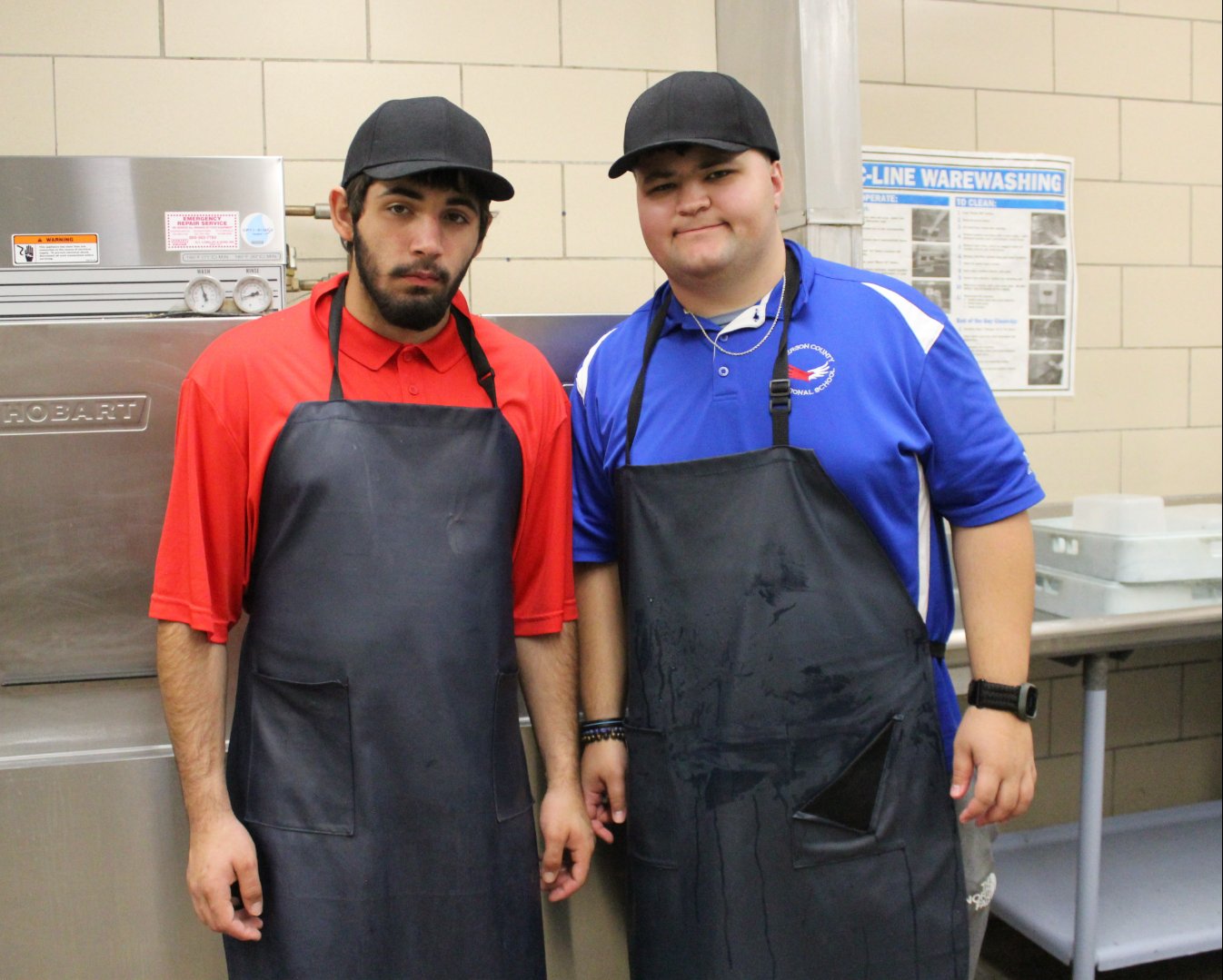
BLOOMINGDALE — Jefferson County Joint Vocational School Transition to Work students are gaining valuable job skills by helping in the school cafeteria. For the second year, students are participating in work-based learning, spending two days a week assisting cafeteria staff during lunch from 10 a.m. to 12:30 p.m. Their duties range from cleaning and organizing tables and chairs in the commons area to washing dishes and preparing trays for the next meal service. Six students have completed training to work in the dish room, with four more being added. TTW instructor Jennifer Davis said students must complete a minimum of 250 hours of work-based learning throughout the year to earn a lab grade. Some students more than double that requirement during their junior and senior years. “We like to have them work two days in a row and try to work with someone different,” Davis said. “If they are not working in the cafeteria, then they are working in the Soaring Eagle Café (selling treats and slushies). They work a minimum of 250 hours and continue to accumulate them. Last year I had seniors with over 500 work-based learning hours.” Davis said students enjoy the work, which helps prepare them for employment after graduation. “They like the interaction with other students and work well with the cafeteria staff. It’s a great simulation if they get to work in a restaurant,” Davis said. “There’s nothing better than real-world experience. We’re really happy that (the Nutrition Group food service) wanted us back. It’s a wonderful opportunity.” Students said they are developing their skills through hands-on experience. “I’m doing a lot more now,” said Ethan Sherwood, a senior based at Toronto High School. “I like to keep busy.” Sherwood has participated in the program since his junior year and has gained experience loading the dishwasher and organizing trays. Junior Ryan Cook, who attends Buckeye Local High School, began learning workplace skills this year. “It’s good,” Cook said. “It’s hands-on work and you learn a lot of skills.” JVS Food Nutrition Director Nicole Marshall also welcomed the student workers, saying they have been a valuable addition to the cafeteria while gaining practical experience. “I’m excited to have the kids here. They want to be here and are taking ownership of their job,” Marshall said. “They do it with a smile and all while they are learning. At the end of the day, it gives them confidence to do the job and they can go out into the real world.” Marshall said the experience helps students build connections and develop skills that could lead to long-term employment. She added that her three years working at Indian Creek Local Schools, where the TTW students are based as their home school, have helped her develop relationships with the students. “It’s cool to be able to experience the growth they have achieved and it’s exciting to see them thriving.”

(more)
JVS Fire and EMT program prepares next generation of first responders
Oct 22, 2026

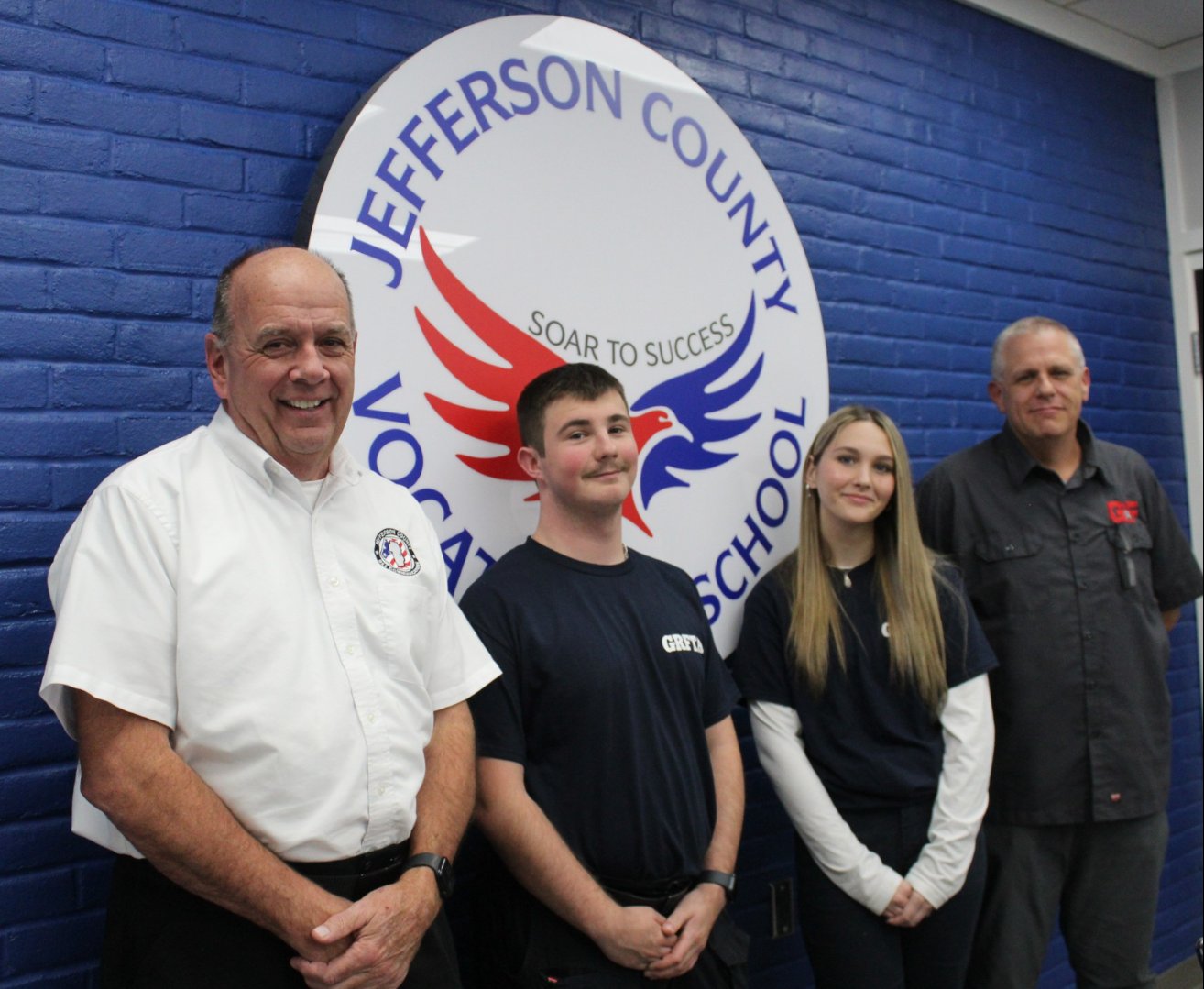
BLOOMINGDALE — The newly established Fire and EMT program at Jefferson County Joint Vocational School was in the spotlight during the JVS Board of Education's regular meeting Oct. 20, as officials learned how it is preparing the next generation of first responders. Fire and EMT instructors Rob Herrington and Rusty Cominsky joined students Spencer Narveleit and Khloe Buchanan to discuss how the program could help address a shortage of emergency personnel locally and nationwide. Herrington, who serves as Jefferson County 911 director and Wintersville fire chief, said staffing shortages have challenged fire departments and that the JVS program could help fill the void in the years ahead. “We were an all-volunteer department and we started staffing in 2016. As soon as we started to staff, we realized there were no people, so we were recruiting people from the Columbus area to the Canton area,” he said. Herrington said previous efforts to establish a training program at the JVS did not come to fruition, but school and fire officials revisited the idea and added the course this year. The program currently has nine students who train at the JVS, in Wintersville and at the department's adjacent Gary R. Fellows Training Academy. Herrington said the state-chartered academy trains 550 adults, and he teaches fire courses there alongside Cominsky. Officials hope the new program will introduce more young people to careers in emergency services. “What is this career like when you leave and go out into the world? First of all, they will be instantly employable because they will be Firefighter 2, which is the standard, and they will be EMT’s,” he commented. “The only thing they will lack is paramedic training, but the fire departments will put them through the paramedic training.” Herrington said paramedic training is provided through a college or community college, while JVS students will receive instruction in areas including driver’s training, hazardous materials and incident command. The program includes both in-house and visiting instructors. He said emergency responders are needed everywhere and the field offers strong benefits. Herrington also praised the JVS for welcoming the program. “We are really, really excited to be here. Since we’ve been involved in this process going back to last year, I’ve been very impressed with this organization. It’s been a really, really good experience and that’s a hat’s off to you for building this environment for us to work in.” Cominsky, who has worked in public safety for four decades and served as a police officer for 35 years, said the program has five instructors with extensive knowledge and experience. Students are working toward certifications and will take a state certification test. They have also been learning to operate a fire truck. Junior Spencer Narveleit, an Edison student, said he is gaining valuable knowledge and hopes to join a local fire department after graduation. He is already a junior member of the Richmond Volunteer Fire Department and said he enjoys the class. “I’ve always wanted to do this...and I plan on working at Wintersville part-time, Richmond full time and any place I can,” Narveleit added. Junior Khloe Buchanan, who attends Buckeye Local High School, called the program a fantastic opportunity. “This program is so new. My first time actually realizing I could take a program like this was during orientation. I always knew I wanted to do something medical and I applied, and I love it here,” she quipped. “I can say everybody in our class enjoys our class. We are all a team. At the end of the day, I know that we’ll be there for each other and we’ll be at each other’s side.” Cominsky thanked school leaders for providing additional space for the class, which had been running out of room. Herrington said the Stratton Volunteer Fire Department recently received new equipment through a grant and offered its extra air packs for student training. “Those fire departments are really looking forward to this program,” Herrington concluded. “Junior firemen want to have careers, so nobody knew what that path was so they had to figure it out. These kids will come out at age 18 or 19 and will be ready to go.” Board member Ruth Anne Bruzzese asked Narveleit about his responsibilities during active calls with the Richmond department. Herrington explained that cadet firefighters ages 14-17 assist with support tasks such as raising ladders and preparing hoses, which he said account for 80% of the job. Students will also train in controlled environments as part of their education and earn certifications that could give them an advantage when applying for jobs. “They send a resume out and they are Fire 2 and EMT, and that is huge,” Herrington concluded. “They’ll go to the top of the list right away.” Superintendent Ted Gorman thanked Herrington, Cominsky, the instructional staff and the student speakers for sharing their knowledge. He also praised the nine students who selected the course as their first choice and said he hopes enrollment will grow. In other business: Board President Steve Bezak III offered to speak to local school boards about increasing federal funding for special education services. Bezak said Congress pledged in 1975 to cover 40% of the cost but has not contributed more than 10% since then. He said 3.7 million students used the services in 1975, with about 8.3 million expected to do so next year. Gorman reported that work on the computer networking lab was complete and the heavy equipment and Fire and EMT labs had been relocated. Carpentry students are expected to upgrade flooring in the multimedia and design program. He also announced that the Veterans Day breakfast will be held Nov. 10. Principal Heather Hoover said the Fall Fest was successful. The Pathways, Possibilities and Pasta spaghetti dinner was scheduled for Oct. 22 from 4:30 to 7 p.m., followed by the second annual JVS Car Show on Oct. 24 from 11 a.m. to 3 p.m. The next regular board meeting was scheduled for Nov. 10 at 5 p.m. in the board conference room to accommodate the annual Ohio School Boards Association Capital Conference in Columbus.

(more)
Indian Creek program gives students real-world job experience
Oct 22, 2026

WINTERSVILLE — Indian Creek Local Schools is helping students develop workplace skills through its new Creek-Based Learning program, which provides hands-on experience in school cafeterias and other settings. District Director of Food and Nutrition Nicole Marshall teamed up with Indian Creek High School intervention specialist Amber Scott to give students job experience throughout the district. About 11 students in grades nine through 12 began working in September at ICHS or traveling to Indian Creek Middle School, Hills Elementary, Cross Creek Elementary and Crossroads Christian Church in Wintersville. Students spend more than an hour at a time cleaning trays, preparing prepackaged and other foods, and assisting cafeteria staff through The Nutrition Group food service. “They go to all of the buildings, including Crossroads Christian Church on Monday, Cross Creek on Tuesday, Hills on Wednesday and Indian Creek Middle on Thursday and Friday, plus we also have students every day at the high school,” Marshall said. “They are helping to prepare the breakfast trays, counting prepackaged items, helping wash dishes, and doing small, miscellaneous jobs.” Students wear hairnets and gloves and follow kitchen guidelines. Those younger than 18 assist in the cafeterias under supervision. Marshall praised the students for their initiative, adding that cafeteria employees have also been impressed with their work. “All of the ladies at the middle school said they are very helpful and look forward to them coming,” she added. “Teachers are on hand to supervise and Amber monitors them and sets them up for success. All we’re trying to do is prepare them for work life and help them gain experience and life skills to get a job.” The idea was inspired by a similar program Marshall helped oversee at Jefferson County Joint Vocational School, where she also directs food service. Students in the Transition to Work program clean and organize tables and work in the dish room. After seeing the benefits of that program, Marshall saw an opportunity to introduce a similar initiative at Indian Creek. She approached Scott, and the two received approval from district Director of Special Education John Rocchi to launch the program. Marshall said the results have been positive. “It’s exciting to give them experience and nurture them, and hopefully they can take what they learn here and go to work,” she continued. “Amber wants them to treat it like a job and [paraprofessional] Christine Fenske does a good job working with the students.” The program also gives students opportunities to return to their former elementary and middle schools and reconnect with staff members who helped them when they were younger. “They have relationships with cafeteria workers who have been here for 20 years [and when the teens were younger students], so it’s full circle.” Scott said students begin work at 9 a.m. at ICHS and from 11 a.m. to 12:30 p.m. at the other locations. When students at Crossroads are not working in food service, they help make pamphlets, stuff envelopes, clean rooms and pull weeds. “We’ve been doing this since after Labor Day and Nicole has been receiving positive feedback. Some students see their old teachers and are also helping out,” she commented. “Eventually I want to have community-based learning but now I’m happy to do Creek-Based Learning. They are building relationships with peers, and when they go into the community they will have to learn how to work with people.” Scott said students work at different levels, but everyone has a role. Senior Brayden Stewart also helps with the group, while Fenske and other school staff members provide support. “The main goal is to start with a work-based program and transition into a community-based one. It’s nice having people on board and just being a great help, and Mr. Rocchi was excited about it.” Students said they enjoy having jobs to do throughout the district and at Crossroads. Freshman Matthew Morris, who works at Cross Creek Elementary, said he has learned new things and enjoys helping with organizing tasks at Crossroads. Freshman Mason Karas, who works at Hills Elementary and Indian Creek Middle School, said his duties include cleaning tables and preparing breakfast trays. Putting the sausages on the trays is his favorite task. “I like to go to work in the cafeteria,” said sophomore Nicholas Rapko, who works at Indian Creek Middle School. “I’m doing better at work,” added freshman Morgan Moffat. “I have fun.” Rocchi said the program provides students with disabilities opportunities to develop practical skills, gain confidence and become more independent. “The Creek-Based Learning Program is making a meaningful difference in the lives of students with disabilities by providing opportunities to learn, grow, and develop valuable life and job skills in real-world community settings. Through partnerships with community organizations such as Crossroads Christian Church, students gain hands-on work experience, build confidence, strengthen social skills, and develop greater independence. These experiences help students recognize their abilities, contribute to their communities, and prepare for a more successful and fulfilling future,” Rocchi concluded. “This program also reminds us of the importance of inclusion and the value of giving every student an opportunity to reach their full potential. We are grateful to our community partners, staff, and volunteers who help make these experiences possible. Their willingness to open their doors and support our students demonstrates the power of a community working together. The Creek-Based Learning Program is about more than learning job skills; it is about building relationships, creating opportunities, and helping every student find their place in the community. We are proud of our students and thankful for a community that supports their success.”

(more)
Tressel helps put career training in the driver’s seat at Utica Shale Academy
Oct 22, 2026

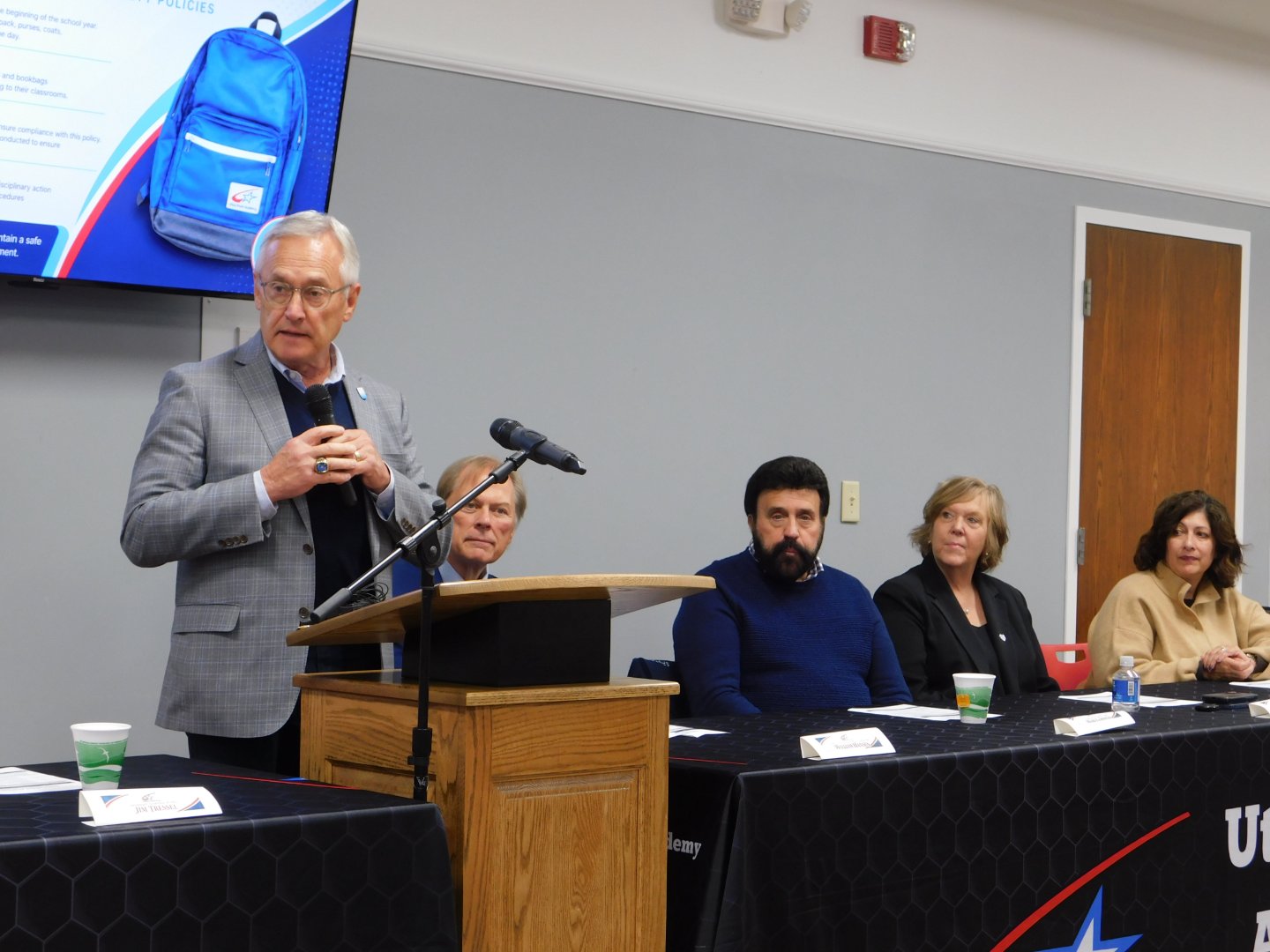
SALINEVILLE — The addition of automotive maintenance instruction using vehicles that transport students to and from Utica Shale Academy was celebrated Monday by Ohio Lt. Gov. Jim Tressel, other state officials and the leader of a national nonprofit organization that helped fund the project. Speaking before school administrators and guests, Tressel noted that CNBC recently named Ohio the top state for business attraction, retention and expansion. He said the projected economic boom is the result of several factors, including the hard work of Gov. Mike DeWine, state and local officials and industry leaders. “We’re at a moment when the pendulum is swinging in the right direction,” Tressel said. “The only way to seize that moment is to have players,” said Tressel, a former college football coach, explaining that those players include young Ohioans who must receive the training needed to prepare for future business development. Tressel said DeWine has stressed that “Every Ohioan needs three non-negotiable things: to be safe, to be physically and mentally healthy, and to have an opportunity to reach their God-given potential.” He praised Utica Shale Academy for helping its students pursue those opportunities. William Hansen, chief executive officer of Building Hope, said the school was one of five winners in the national Future Forward Schools Prize grant competition organized by Building Hope and Britebound. Both nonprofit organizations aim to improve access to career and technical education at schools nationwide. Utica Shale Academy was one of 256 applicants for the grant program, part of a three-year initiative recognizing middle and high schools that introduce students to career preparation early. As a winner, the school received $50,000 to add automotive maintenance to its curriculum and construct an 840-square-foot storage building for equipment used in the program. Hansen praised the academy for developing the facilities, acquiring equipment and meeting standards needed to prepare students for industrial careers. “If you ask students to learn industrial level skills, the (class)room should look like the industry,” he said. Hansen presented a trophy to Utica Shale Academy Superintendent Bill Watson in recognition of his efforts to establish the school, which provides training in welding, diesel mechanics and industrial maintenance to about 170 students. Watson introduced U.S. Rep. Michael Rulli, noting that the congressman was a strong supporter of the charter school during its development. Rulli said his role in establishing the school was one of his proudest accomplishments. “Utica Shale Academy is one of my favorite projects,” he said. He said he continues to advocate for introducing students to career options as early as fifth and sixth grades to encourage those who might otherwise consider dropping out of school. Rulli said economic prospects in some areas can appear bleak, leaving young people vulnerable to crime and drug abuse. “They must learn you don’t have to have that life. You can have a better one,” he said. Rulli added that a four-year college degree is not the right path for everyone and that a successful welder can earn a six-figure salary without taking on college debt. Watson said the automotive maintenance program also benefited from $900,000 in state transportation funding secured by state Sens. Brian Chavez, R-30th District, and Al Cutrona, R-33rd District, along with state Reps. Ron Ferguson, R-96th District; Matthew Kishman, R-50th District; Tex Fischer, R-59th District; Monica Robb Blasdel, R-79th District; and Lauren McNally, D-58th District. The funding allowed the school to expand its fleet of eight-passenger vans from seven to 17. Watson said the vehicles transport many students to and from school and will also serve as hands-on training tools for lessons in routine maintenance, including oil and tire changes. “We wanted to create a circular economy in which our students have an opportunity not only to ride to and from school but also to work on those vans,” he said. Following the remarks, attendees toured the D.B. Dixon Garage, which will serve as the students’ classroom. The automotive maintenance program also received support through a donation from the D.B. Dixon Trust for Diesel Mechanics. Known affectionately as “Diesel Dan,” Dixon was a Lisbon resident and self-employed diesel mechanic who excelled as a vocational student and represented his high school in national competitions. Watson also noted that students from East Liverpool High School’s media arts program attended the event to record it. “I think that’s really special — one career-tech program using its skills to showcase another. East Liverpool’s students were gaining real experience in media production while highlighting the career opportunities we’re creating for our students. To me, that’s a great example of future-forward education, and their program deserves recognition for it.”

(more)
Aubiel brings classroom experience to new CES role
Sep 14, 2026

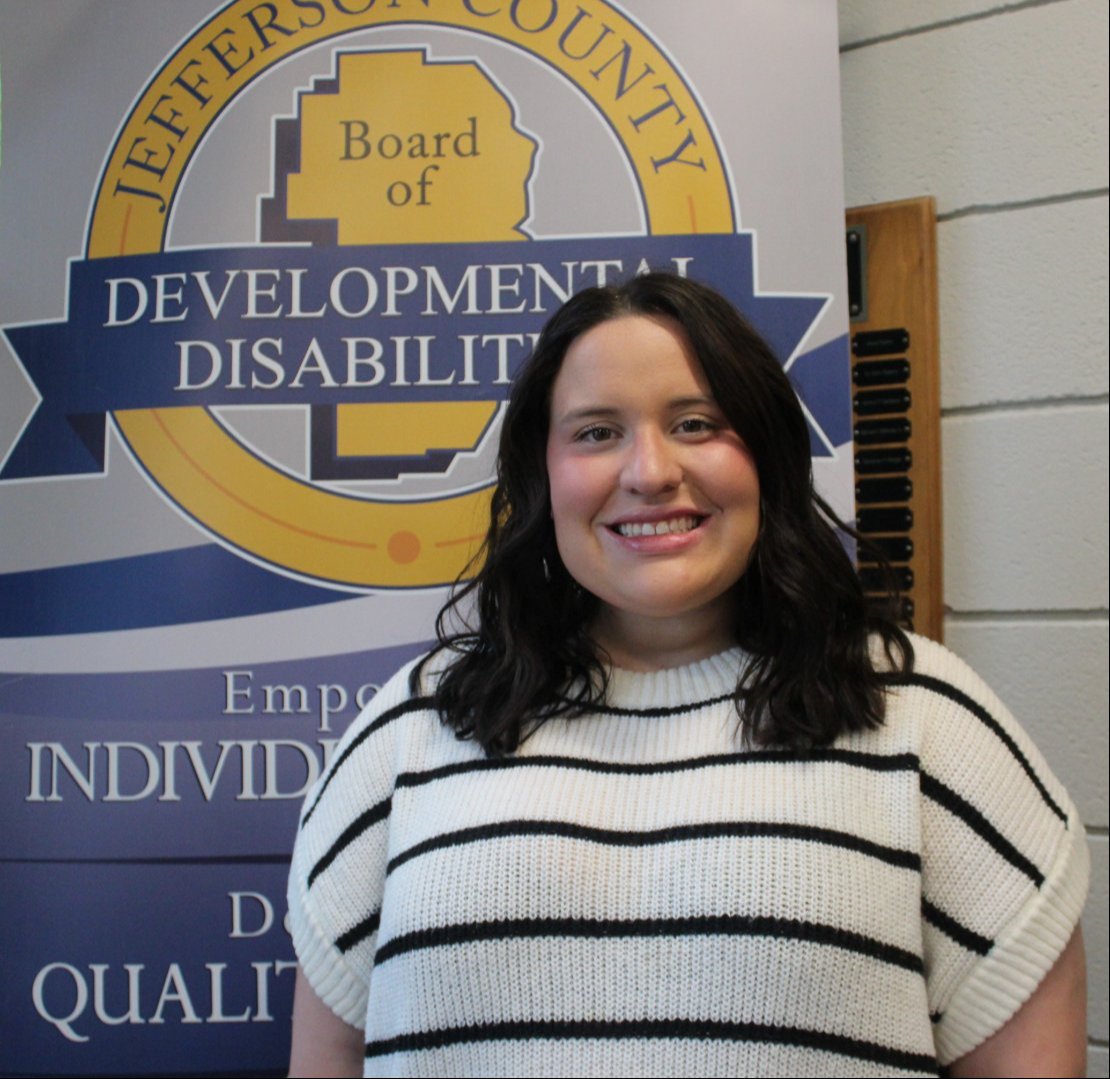
STEUBENVILLE — Shannon Aubiel is drawing on her experience working with students to help youth and adults find their place in the workforce through the Jefferson County Board of Developmental Disabilities’ Community Employment Services. Aubiel, of Toronto, began working as a community employment specialist in August and assists about 15 individuals with finding jobs and becoming more independent. She previously taught special education in grades 7-12 at Toronto High School for three years and said that experience has carried over into her new role. “I think any knowledge from there benefits me from the relationship standpoint because I’ve seen some of those kids in the classroom,” she said. “I have an understanding of what makes them different and can also highlight their strengths.” Aubiel works with fellow community employment specialist Laura Bomerscheim to help individuals find employment opportunities. Their work includes job coaching for adults and providing Pre-Employment Transition Services, or Pre-ETS, to youth ages 14 and older. As part of Pre-ETS, Aubiel visits high schools throughout Jefferson County to help students with job development, including preparing resumes and gaining community work experience. She also provides driver’s permit tutoring and will assist with the annual summer youth work program, in which teens perform light maintenance work in local communities while earning money and gaining job experience. The goal is to help individuals gain employment, become more independent and contribute to their communities. Aubiel said the transition from the classroom to her new position has been relatively smooth. “I like it. It’s a good change of pace from what I’m used to, and it’s nice to be a resource for people in our community to get job experience,” she said. “I’m excited to build relationships and help those adults in our community. You hear how teachers can make a difference in someone’s life, but you can do it here as well.” A native of Stratton, Aubiel graduated from Edison High School in 2019 and earned a bachelor’s degree in political science from Kent State University in 2021. She earned a master’s degree from Western Governors University in 2025. Aubiel married her husband, Jarrett, in June, and the couple has a puppy named Archie. She remains active at Toronto High School as head coach of the volleyball and softball teams and previously served as an assistant coach for two years at Toronto and Edison. “We are a stepping stone to making sure they have a bright future,” Aubiel said. Bomerscheim said Aubiel’s background has made her a valuable addition to the program. “Having Shannon join us has been a huge asset to our team. Her teaching background has helped ease her transition into her new role, and she has brought valuable experience, patience, and a fresh perspective to our team. We are excited to have her on board and look forward to all she will contribute in the future of our program,” Bomerscheim said. For more information about Community Employment Services, call 740-266-3840.

(more)
LocaLife
Install LocaLife
Add LocaLife to your Home Screen for quick access.
LocaLife
Add LocaLife to your Home Screen
Open your browser's Share menu and select Add to Home Screen.