The stories behind the scores
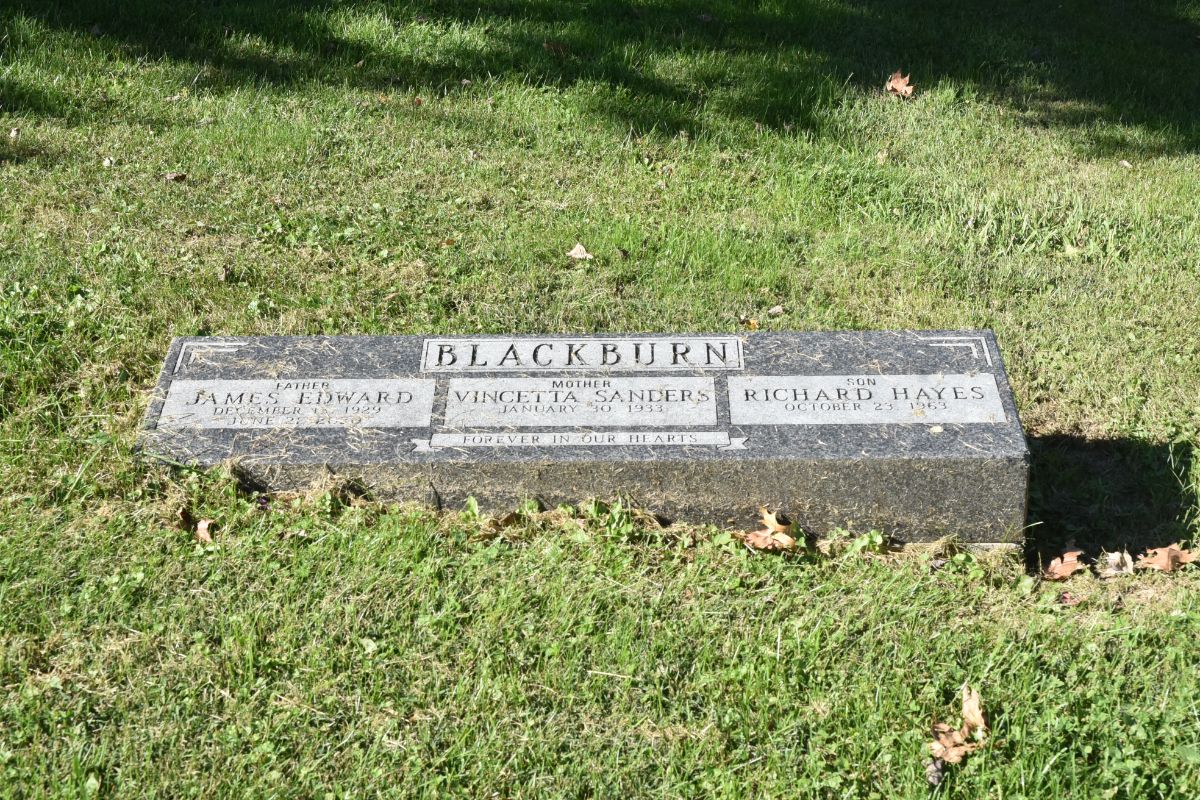
I walk through Union Cemetery in Steubenville nearly every day now. I started taking those walks last year, when I was still working for Ogden Newspapers, splitting my time between the Wheeling Intelligencer and the Steubenville Herald-Star and needed someplace to clear my head from a business that had consumed most of my adult life. What began as a way to get away from deadlines and computer screens for a little while eventually became something much more important. Those walks became the place where I did some of my deepest thinking.
It was on those walks that I finally convinced myself to do something I had been afraid to do. After nearly 30 years in the newspaper business, I decided to walk away from the security of a paycheck and take a chance on myself. I decided that if I still believed as strongly as I did in local journalism, maybe it was time to stop complaining about what the business had become and try to build the kind of local news operation I still believed could work.
Somewhere along those winding roads through Union Cemetery, The Ohio Valley Current stopped being something I merely thought about and became something I knew I had to try. The irony, of course, is that leaving the newspaper business hasn't taken me away from where I started. In many ways, it is taking me right back there.
This week, I will return to Harding Stadium to cover Steubenville Big Red football for the first time in years. I haven't been on the Big Red beat since 2012. I was barely 20 years old when I first started covering Big Red, and Harding Stadium is where I cut my teeth as a sportswriter and as a journalist.
When I walk back into Harding Stadium, I know that, in some ways, it will seem as though I never left. I will see familiar faces and, much like riding a bike, I suspect covering football will come right back to me. In other ways, though, I know it will never be the same. Some of those familiar faces have faded away.
Richard Crugnale won't be there.
Crug was the public-address voice of Big Red football, but the man behind that voice was remarkably soft-spoken. He was incredibly kind, and he loved Big Red football. There was nothing manufactured about that love. It was simply part of him. His voice became so intertwined with my memories of Harding Stadium that it is difficult for me to separate one from the other. In my early days in that press box, Chuck Watt backed up Crug. Chuck left us early into my Big Red beat, but when I think of Crug, I still picture Coach Watt at his side.
There are voices you don't realize have become part of the soundtrack of your life until you can no longer hear them. I know that when I return, there will be some moment when the crowd settles or an announcement comes over the speakers and my mind will supply a voice that isn't there anymore. I will hear Mr. Crugnale.
I will also think about John Neese and Jim “Jags” Huggins from WSTV/WRKY radio, who sat directly in front of me in that press box for a decade. I was young and still figuring out how to cover a football game. My statistics were scratched haphazardly across a legal pad until Jags handed me my first real stat sheet. It had a place for every number — rushing yards, passing yards, first downs and all the other numbers that I had scribbled across four scattered notebooks. That stat sheet made those numbers make sense. I still keep football stats the way Jags taught me, duplicating his stat sheet exactly as I first saw it.
John offered his help in a different way. He was always trying to hand me a lede for my story, and there were times I could have sworn I was sitting behind the Ohio Valley's version of Mike Lange. John put the word “color” in color commentator and had expressions for everything, but the one that has remained lodged in my brain all these years was his assessment of a particularly inaccurate passer: He “couldn't hit the broad side of a barn with a fistful of rice.”
Nearly 30 years later, I still hear that line when I see an underthrown or overthrown pass.
Those are the things a young reporter absorbs without realizing she is being taught. Jags helped me organize the numbers. John helped me listen for the story. Neither lesson was delivered like a lesson, and maybe that's why I remember them.
Paul Firm will also be missing from the Abe Bryan Press Box. He, too, left us before I left Ogden for the first time. And just as it had the last time I was in the press box, his absence will be felt.
Paul was a meticulous statistician and a talented writer. If you made a mistake, he was probably going to be among the first people to let you know about it. The phone would ring and I would hear, “Steph ...” and I knew. But the wonderful thing about Paul was that he was just as quick to call when you had done something particularly well. There was value in both when I was a young writer still trying to figure out whether I was any good at this.
Paul and I also shared a habit that neither one of us should have been particularly proud of — chain-smoking — and we often shared a smoke break on the press-box steps. On road trips, I knew I could count on Paul to find someplace where we could sneak in a cigarette on school property. That included, on at least one occasion, the roof of Stambaugh Stadium.
Paul died at 53. At the time, I didn't fully comprehend how many years he didn't get. Today, I realize he was only a few years older than I am now, and that makes his death land differently.
And when I close my eyes and conjure up a glimpse of Paul at a Big Red game, Matthew is right there beside him.
Paul brought Matthew to the games — and just about everywhere else — and there didn't seem to be a press box in any stadium that he couldn't get Matt's wheelchair into, no matter how much pushing, pulling and maneuvering it required. Matthew was every bit as much a part of that press box as any statistician, writer, broadcaster or coach who came through its doors.
I remember the shiny tennis shoes, the shock of red hair and that animated grin that flashed wide across his small face. Mostly, I remember that I expected Matthew to be there because he always was. His presence didn't require an explanation or even a job title — although, technically, he had one: finger thrower.
Like his father, Matthew Firm did not receive the gift of years. He died Feb. 8, 2025. He was only 30.
One of my favorite memories of Paul and Matt involves a 2007 Week 9 trip to Canton Central Catholic, when both the Crusaders and Big Red were undefeated.
Big Red trailed late, but Dwight Macon connected with Jeremy Banks on a 14-yard touchdown pass as time expired, and the extra point gave Big Red an improbable 35-34 victory.
I'd like to tell you I witnessed one of the most remarkable finishes of my years covering Big Red football. I didn't.
I was outside chain-smoking, convinced Big Red was about to lose and trying to work up the nerve to interview Reno Saccoccia after what I feared would be the end of a 48-game winning streak.
I was mentally rehearsing questions I desperately hoped I wouldn't have to ask. Fortunately for me, Big Red found a way to win.
Of course, I had arrived at Canton Central Catholic's stadium just minutes before kickoff. Being late had become something of a pregame ritual for me. When Big Red won the state championship in 2005, I arrived at Paul Brown Tiger Stadium in Massillon so late that a security guard had to give me a ride on a golf cart to the other side of the field. He sped me through the crowd on that blistering cold December day — much faster than I realized golf carts could go — and deposited me at the bottom of the press box steps with no time to spare.
Apparently, punctuality wasn't among the skills I had mastered as a sportswriter. If being "late to the a game" was a person I would be it, which makes it poetic that the first regular-season game I cover this year will be Big Red's last of the year.
My inability to arrive to a game at a reasonable time also made finding a parking spot a challenge.That night in Canton, I thought my luck had finally changed when I pulled into the parking lot and spotted an empty space right beside Paul's white van.
What were the odds? A packed stadium, minutes until kickoff and a parking space practically waiting for me. I pulled right in, congratulated myself on my good fortune and hurried inside.
What I didn't realize was that it wasn't a parking space at all. It was the space Paul needed to get Matthew's wheelchair in and out of the van.
After the game and my postgame interviews, I made my way back to the parking lot to find Paul leaning against my car.
“We were wondering who the asshole was,” he said. Matthew broke into a grin, enjoying Paul's insult directed at me.
I don't remember exactly what I said in response. I'm fairly certain it involved an apology and probably some embarrassment.
But I can still picture Paul and Matt standing there, waiting for me.
Big Red's regular-season winning streak would eventually come to an end nearly two years later, in 2009, when Inkster handed the Red a 36-29 loss at Harding Stadium. It was Big Red's first regular-season defeat in 70 games.
Apparently, somewhere during that game, I also managed to violate one of journalism's cardinal rules. Because when I returned to Harding Stadium the following week, Crug had something to say to me about it.
“I think you turned into a fan,” he said. “You were cheering for Big Red.”
I suppose after years of covering Big Red, watching that remarkable streak unfold and witnessing it coming to an end, I had momentarily forgotten that I was supposed to be an impartial observer.
“It's OK,” Crug smiled. “I won't tell anybody.”
When I walk back into that press box, I know my eyes will instinctively go toward the places once occupied by all of them — Mr. Crugnale, Paul, Matt, Jags and Coach Neese. Memory has a funny way of refusing to update the seating chart.
Eventually, football season will end and winter will come, and sooner or later The Current will put me back inside a basketball gym — the Crimson Center specifically. When that happens, there will be another person I will instinctively look for even though I know he won't be there — Joe Dragoun.
Joe was the Big Red basketball statistician, as meticulous as Paul. Before games, he would hand me a fact sheet filled with the little pieces of information sportswriters love — statistics, milestones, bits of history and the sort of details that might only become a sentence or two in your story but could make that story better.
Long before you could pull out a phone and search for practically anything in seconds, people like Joe were our databases. Joe's database just happened to come handwritten — perfectly handwritten. Joe's script was so neat it almost looked typed.
He spoke just above a whisper. He was kind and considerate and had a head full of white hair that he kept pushed back, making him look like every good grandfather ought to look. And like every good grandfather, he always had a piece of hard candy to offer and a stick of Big Red chewing gum.
When Big Red made its historic basketball run to the state final this past season, I couldn't help but think about Joe. I thought about how proud he would have been and how much he would have enjoyed that ride, as would Coach Watt. I could almost picture the fact sheets Joe would have put together for each game, filled with the milestones, statistics and bits of history even Google couldn't have found.
Those are the things I remember — the perfect handwriting, the fact sheets, that soft voice, the Big Red gum and Joe standing there patiently holding out a piece of hard candy until I gave in.
And now, almost every day, I walk past his grave.
I also walk past Jim Blackburn's grave, which seems appropriately placed because it overlooks Big Red's new baseball field. Just as he did at Vaccaro Field, Jim still has one of the best seats in the house.
Jim was the public-address announcer at Vaccaro, and “gruff” doesn't begin to cover it. Jim could work the F-word into more parts of speech than anyone I have ever known. It could be a noun, a verb, an adjective, an adverb and, when necessary, punctuation. He could use it more often in one conversation than most sailors or truck drivers I ever met — impressively so. Resting near his microphone was a sign with a few missing letters. It read “F_ CK _ F F.” If you noticed it, he would ask if you would like to buy a vowel.
You could spot him, too. There were the yellow Blue Blocker sunglasses, the khaki shorts and the occasional Hawaiian shirt unbuttoned to reveal a Big Red baseball T-shirt. He was as colorful as any character I had ever met — or have met since.
Jim would practice a player's name several times before the kid came to the plate, say it perfectly every time and then absolutely butcher it once the microphone was live. Inevitably, a four-letter word would follow — into a live mic and crackling out of the speakers around the field.
But underneath his rough edges and unapologetic demeanor was a man who loved Big Red baseball and absolutely adored kids. And despite that abrasive exterior, the kids loved him right back. Jim would chat up any child who happened to wander into or past the press box. One of my favorite memories of him involves my son, River, when River was about 3 years old.
“What's your name, kid?” Jim asked as River sat down next to me.
“River,” he said.
Jim looked at him.
“What the f--- did you say?”
“River,” my preschooler repeated, his freckled face smeared with ketchup from his hot dog.
Jim stared at this little boy for another second and asked, “Who in the hell would name you River?”
Without missing a beat, my 3-year-old shrugged and said, “My mom, I guess.”
Jim just shook his head and said, “Wipe your f---ing face, kid.”
That was Jim. As a mom, maybe I should have cared more about the language, but admittedly, River's little ears had heard those words before. And I knew Jim wasn't being mean. He was just being Jim.
Those are the kinds of people who become part of a ballpark as much as the scoreboard, the dugouts and the crack of a bat. Jim was one of them. Andy Fidak was another.
Andy won't be sitting on his stepladder working the scoreboard at the Knight Baseball Complex.
Everybody called him “Uncle Andy” because his nephew Alan handled the public-address duties beside him, and Andy called me “Elvira” — a play on my last name. When Alan would play “Elvira” by the Oak Ridge Boys between innings, Andy would gently elbow me and say, “Hey, it's your song,” in that unmistakable quick-yet-slow cadence of his.
Andy talked fast but not exactly hurried. Still, he could take a perfectly good long word, knock a syllable or two out of it and make you understand exactly what he meant. Then came that unmistakable laugh — a cackle disguised as a chuckle, youthful despite Uncle Andy's years.
It is strange what the mind holds onto after someone is gone. I don't have to work very hard to remember Andy's laugh. I can still hear it.
And I can still remember the sound of John Ramer's voice behind me as he made his appearance in the press box after what was more than likely a round of golf that held him up that day. Nine times out of 10, I would be sitting in John's spot. We both knew it. I would always offer to move, and he would always refuse.
John was chivalrous, but he was mischievous, too. An off-color joke or two would inevitably spill from his lips in a bit of a hush. He talked golf, questioned just about every play made on the field and was a vehement supporter of Toronto baseball.
Mr. Ramer is gone now, too. But like the others, he isn't forgotten.
When baseball season comes and I find myself around a ballfield again, I know there will be moments when I'll hear Andy's laugh in my head and Jim muttering some four-letter word under his breath. I'll picture Jim in those yellow Blue Blockers and khaki shorts, and I'll remember John quietly refusing to take back the seat we both knew belonged to him.
Spring will arrive just as it always has. The fields will be dragged, the lines will be painted and another group of kids will pull on uniforms. The games will continue.
But some of my favorite people won't be there. Maybe that is what all of this comes back to for me.
When I started taking those walks through Union Cemetery last year, I thought I was trying to decide whether I had the courage to leave journalism after nearly 30 years. I understand now that I wasn't really trying to leave journalism at all. I was trying to find my way back to the version of it that made me fall in love with this business in the first place.
I wanted to get out from behind a desk again. I wanted to walk into stadiums and gyms and stand beside baseball fields. I wanted to talk to people, write their stories and cover the communities where I have spent most of my life.
The Current is giving me that chance.
That chance will take me back through the gates at Harding Stadium, back to a place where a 20-year-old sportswriter once worried mostly about getting the statistics right and making deadline. Some part of me will probably feel 20 again when I walk inside, but I won't see that stadium through 20-year-old eyes anymore.
I will notice the places where Crug, John, Jags, Paul and Matthew should be. When winter comes, I'll look toward the scorer's table and remember Joe with his perfect handwriting, his Big Red gum and a piece of hard candy extended in my direction. When spring comes, I'll hear Uncle Andy calling me “Elvira,” followed by that laugh. I'll think of Jim in his Blue Blockers and khaki shorts, a 3-year-old River telling him exactly who was responsible for his name, and John Ramer quietly giving up his seat.
That is what nearly 30 years in this business has finally taught me. The box scores fade. Most of the stories eventually yellow or disappear into an archive or a scrapbook, and there are games I once thought I would remember forever whose final scores I couldn't tell you today.
What remains are the people — the voices, the laughter, the cigarettes on a press-box step, the first stat sheet someone handed a young reporter, the handwritten fact sheets, the hard candy, the shiny tennis shoes, the red hair, the ridiculous sunglasses, the mispronounced names and the conversations. Those things seemed completely ordinary then. That is the thing about the moments that eventually become memories — while you're living them, nobody tells you to pay attention.
I'll still write down the score when The Current's sports coverage starts on Friday. I'll still tell you who threw the touchdown pass, who hit the jumper and who drove in the winning run, because those things matter and telling those stories is part of the job. But I understand that job differently now than I did when I was 20 years old.
The games matter. The scores matter. But the people matter more.
Elverd is founder and editor of The Ohio Valley Current and has spent nearly 30 years telling the stories of the Ohio Valley.